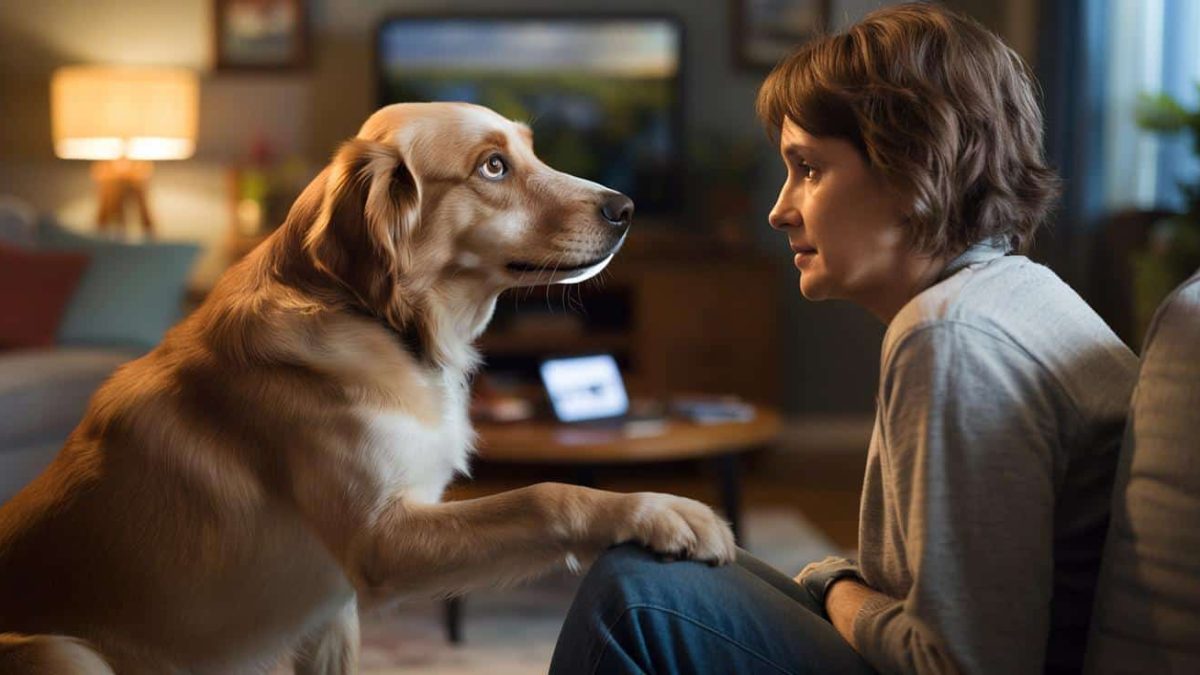
Dog pawing behavior: It is one of the most common gestures our canine companions use to communicate, yet its true meaning often stays hidden in plain sight. While we often dismiss it as a simple plea for a treat or a belly rub, the reasons behind this touch are far more complex and fascinating than most owners ever realize.
For centuries, humans have tried to decode the silent language of dogs, interpreting every tail wag and bark as a specific message. However, the act of a dog placing its paw on your arm, leg, or face is a unique form of interspecies communication that bridges the gap between animal instinct and emotional connection.

Understanding why your dog keeps pawing you is not just about satisfying your curiosity; it is about deepening the bond you share with your furry best friend. Recent behavioral observations suggest that this physical contact is often a window into your dog’s mental state, revealing everything from anxiety to profound empathy.
The Evolutionary Root of the Paw
The act of pawing can be traced back thousands of years to the ancestors of the modern dog. In the wild, wolves and other canids use their paws for more than just mobility; they use them to manipulate their environment and signal intentions to the pack.
When a puppy is born, its first instinct is to use its paws to knead against its mother to stimulate milk flow. This primal behavior creates a lifelong association between pawing and comfort, safety, and nourishment.

As dogs became domesticated, they adapted these survival instincts to communicate with humans. Because they lack the verbal capacity to speak, they rely on tactile stimulation to ensure their needs are met and their presence is acknowledged by their human “pack leaders.”
Seeking Your Undivided Attention
The most common reason for a persistent paw is a simple demand for attention. Dogs are incredibly social animals that thrive on interaction with their owners, and they quickly learn which behaviors earn them a reaction.
If you have ever petted your dog immediately after they placed a paw on your knee, you have inadvertently trained them. They now understand that “paw equals pets.” This is known as operant conditioning, where the dog repeats a behavior because it leads to a desirable outcome.

However, if the pawing becomes frantic or constant, it might be more than just a request for a scratch. It could be a sign that the dog is bored and requires more mental stimulation or physical exercise to burn off excess energy.
“The use of the paw is often a dog’s way of initiating a social contract. By touching their owner, they are effectively ‘checking in’ to ensure the social bond is still active and that they are not being excluded from the group dynamic.”
The Surprising Science of Canine Empathy
One of the most shocking reasons your dog might be pawing you is that they are trying to comfort you. Researchers have observed that dogs are highly sensitive to human emotions and can detect changes in our scent and body language when we are stressed or sad.
When you feel overwhelmed, your body releases cortisol, which dogs can smell with their powerful noses. In response, many dogs will use their paw to offer a soothing touch, much like a human would put a hand on a friend’s shoulder.
This behavior shows a high level of emotional intelligence. Your dog isn’t just asking for something; they are giving something back—emotional support and a reminder that you are not alone in your distress.
Communication Beyond Words
Sometimes, a paw is a specific tool used to point toward a problem. If your dog paws at you and then moves toward the door, their water bowl, or the cupboard where the treats are kept, they are using directional signaling.
This is a sophisticated form of communication where the dog identifies a need and directs your attention toward the solution. It requires the dog to understand that you have the power to change the environment in a way they cannot.
Paying close attention to where your dog looks after they paw you can save a lot of frustration. It turns a “random” annoyance into a clear dialogue between two different species living under the same roof.
Understanding Different Pawing Styles
Not all paws are created equal, and the way your dog uses their limb can tell you a lot about their current mood and urgency.
| Pawing Style | Common Meaning | Recommended Action |
|---|---|---|
| Gentle Resting Paw | Affection and Bonding | Return the affection with a soft stroke. |
| Rapid Scratches | High Excitement or Hunger | Check their schedule or provide a toy. |
| Heavy “Punching” Paw | Demanding Attention/Boredom | Increase daily exercise and playtime. |
| Paw with Tucked Tail | Anxiety or Fear | Identify the stressor and provide a safe space. |
When Pawing Indicates Anxiety or Stress
While most pawing is harmless and even sweet, there is a darker side to this behavior. If your dog is pawing you while panting, pacing, or whining, it could be a sign of separation anxiety or general stress.
In these cases, the pawing is a self-soothing mechanism. By making physical contact with you, the dog is trying to ground themselves and find security in your presence. They are seeking “reassurance contact” to lower their heart rate.
If the pawing is accompanied by obsessive licking or avoiding eye contact, it may be time to look into environmental factors that are making your pet feel uneasy. Sudden loud noises, changes in the household, or the absence of a family member can trigger this “clingy” pawing behavior.
“When a dog uses their paw as a stress response, it is a signal for the owner to become a calm anchor. The dog is looking for emotional regulation through physical touch, mirroring the way mammals bond for safety in the wild.”
The Role of Hormones and “The Love Drug”
The shocking truth behind that paw on your lap often involves a chemical reaction in both the dog and the human. Science shows that when dogs and humans interact through touch, both experience a surge in oxytocin.
Oxytocin is often called the “love hormone” or “cuddle chemical.” It is the same hormone that helps mothers bond with their infants. When your dog paws you and you respond with a touch, both of your brains release this powerful chemical.
This creates a positive feedback loop. Each time it happens, your bond becomes stronger, and your dog feels more secure. This is why the behavior can become so frequent; it literally feels good for the dog on a neurological level.
Physical Pain and Hidden Injuries
Sometimes, the reason your dog keeps pawing you isn’t about their emotions, but rather their physical health. A dog may paw at you to draw attention to a hidden injury or discomfort they are experiencing elsewhere on their body.
Alternatively, if they are pawing at their own face or ears and then touching you, they might be trying to “transfer” the irritation or get you to help them scratch an area they cannot reach. Allergies, ear infections, or even dental pain can cause a dog to become more “handsy” with their owners.
If the pawing behavior starts very suddenly and is persistent, it is always wise to check their paws for thorns, cracked pads, or overgrown nails. Sometimes the pawing is simply their way of saying, “Hey, this part of me hurts.”
Setting Boundaries with Your Pet
While pawing is usually an expression of love or a request for help, it can sometimes become an invasive habit. Large dogs, in particular, can accidentally scratch skin or ruin clothing with their claws when they are over-excited.
Teaching a “settle” command or asking for an alternative behavior, like a “sit,” before giving the dog what they want can help manage the behavior. This ensures that the dog understands they don’t need to be physically assertive to get your attention.
It is important to remember that ignoring the behavior entirely can lead to extinction bursts, where the dog paws even harder because they think you just didn’t feel it the first time. Consistent, gentle redirection is the best approach for a harmonious home.
“Training your dog to use their paw only on cue can actually improve their cognitive health. It turns a reactive instinct into a controlled task, allowing the dog to feel they are completing a ‘job’ for their owner.”
The Silence of Understanding
At the end of the day, your dog’s paw is a bridge between two different worlds. It is a gesture that says “I see you,” “I need you,” or “I am here for you.” While the reasons can range from a simple hunger pang to a deep neurochemical bond, the underlying message is always one of connection.
By observing the context, the intensity, and the accompanying body language, you can unlock the “shocking” truth of what your dog is trying to say. Whether they are acting as your personal therapist or just looking for a snack, the paw is a testament to the unique evolution of the dog-human relationship.
Next time your dog reaches out with a furry limb, take a second to look at them. They aren’t just being “pushy”—they are engaging in a primordial ritual of love and communication that has defined our relationship with canines for millennia.
FAQs – Why Your Dog Keeps Paw-ing You
Why does my dog paw me when I stop petting them?
This is your dog’s way of saying they aren’t finished with the interaction yet. It is a demand for continued attention and is a learned behavior that usually works because most owners find it too cute to resist.
Is it a signs of dominance when a dog paws at you?
In most cases, no. While older theories suggested it was a dominance move, most modern experts agree it is a social solicitation or an emotional “check-in” rather than an attempt to take control of the household.
Can pawing be a sign of a medical emergency?
While rarely an emergency on its own, sudden and frantic pawing combined with pacing, bloating of the stomach, or inability to settle can indicate a serious condition like bloat. If the behavior seems out of character and panicked, consult a professional.
Does the breed of the dog affect how much they use their paws?
Yes, some breeds like Boxers, Pointers, and Labradors are known for being more “paws-on.” These breeds often use their front limbs more naturally in play and communication than others.
How can I stop my dog from pawing at guests?
The best way to stop this is to reward the dog for keeping all four paws on the floor. Ask guests to ignore the dog until it sits quietly, teaching the dog that pawing leads to being ignored while sitting leads to attention.