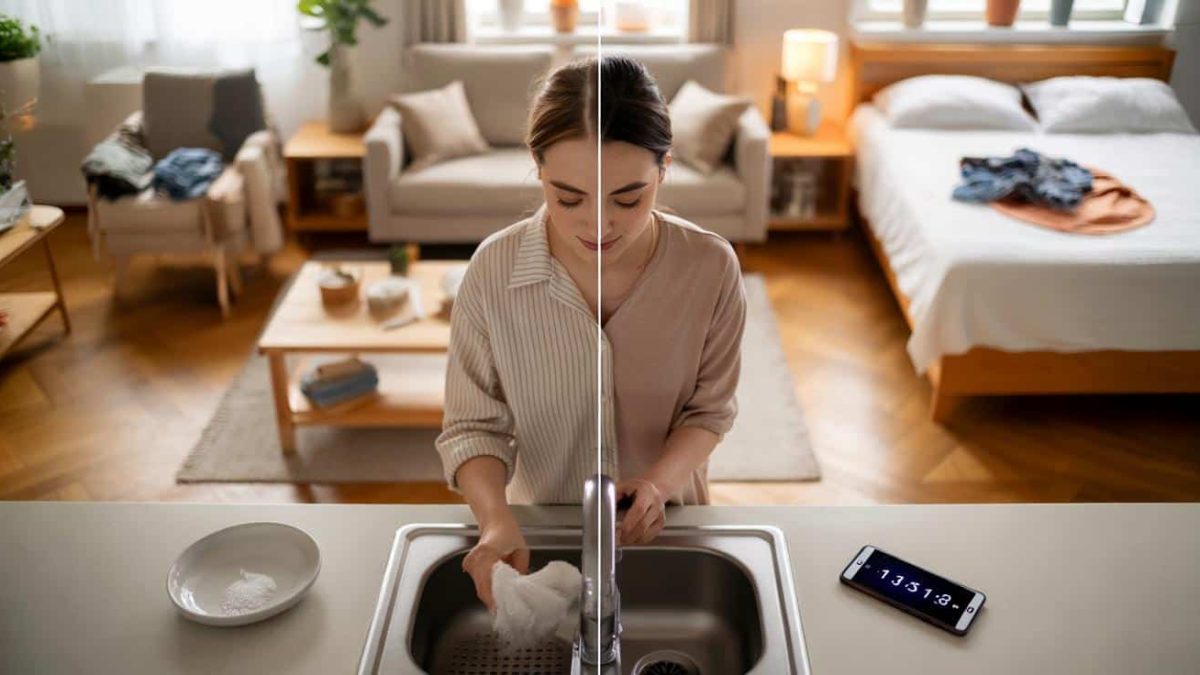
The unexpected superpower of consistent cleaning: For years, I viewed housework as a mountain that needed to be climbed all at once. Like many people, I would let the dishes pile up and the dust collect until Saturday morning, when I would spend six agonizing hours scrubbing my way back to sanity.
This cycle was exhausting and left me feeling like my home was a source of constant stress. I realized that the “marathon cleaning” method was actually hurting my productivity and mental health in ways I didn’t expect.

Everything changed when I stopped trying to clean “everything” and started focusing on tiny habits. Little did I know that by spending just fifteen minutes a day on specific tasks, I was unlocking a superpower that would transform my focus, my energy levels, and my overall happiness.
The Psychological Shift From Chaos to Control
The connection between our physical environment and our brain is much stronger than most people realize. When you walk into a kitchen overflowing with dirty plates, your brain registers that as a “to-do” list that has been ignored, which triggers a subtle release of cortisol, the stress hormone.
By shifting to consistent cleaning, you are essentially telling your brain that you are in control of your surroundings. This sense of mastery over your environment bleeds into other areas of your life, such as your work performance and your ability to stick to a fitness routine.

It is not just about having a shiny floor; it is about the mental clarity that comes from not having visual noise competing for your attention. A clear surface often leads to a clear mind, allowing for deeper creative thinking and better problem-solving throughout the day.
“When a person establishes a rhythmic pattern of maintenance in their living space, the brain enters a state of flow more easily. Reducing visual clutter acts as a proactive tool for managing anxiety and improving executive function in high-stress individuals.”
Why the ‘Fifteen-Minute Rule’ Outperforms the Deep Clean
Most of us fail at keeping a tidy home because we set the bar too high. We think if we can’t spend three hours deep-cleaning the bathroom, there is no point in doing anything at all. This “all or nothing” mentality is the enemy of sustainable habits.

The secret to my transformation was the fifteen-minute rule. By setting a timer and committing to only a quarter of an hour of movement, the barrier to entry becomes incredibly low. It is almost impossible to argue that you don’t have fifteen minutes to spare.
Over time, these short bursts of activity become automatic behaviors. You no longer need to summon massive amounts of willpower to start cleaning because the task is so small it doesn’t feel like a threat to your relaxation time.
The Impact of Consistency on Household Longevity
Consistent cleaning doesn’t just help your mood; it actually saves you a significant amount of money in the long run. Dirt, grime, and dust are abrasive materials that can wear down the surfaces of your home, from hardwood floors to stainless steel appliances.
When you allow limescale to build up on a faucet for six months, it requires harsh chemicals and heavy scrubbing to remove, which can damage the finish. However, a quick daily wipe prevents that buildup entirely, preserving the value of your home’s fixtures.
| Cleaning Frequency | Mental Stress Level | Time Spent Per Week | Surface Longevity |
|---|---|---|---|
| Once a Month Marathon | Very High | 10-12 Hours | Low (heavy wear) |
| Weekly Deep Clean | Moderate | 4-6 Hours | Average |
| Daily Micro-Cleaning | Very Low | 1.5-2 Hours | High (preventative) |
The Domino Effect on Physical Health
It surprised me to learn that my consistent cleaning habits were making me physically healthier beyond just reducing allergens like dust and pet dander. The act of moving around the house, bending, stretching, and lifting items serves as a form of “functional fitness.”
By staying active in small increments throughout the day, I was avoiding the sedentary trap that many remote workers fall into. Those tiny movements add up quickly, keeping the joints lubricated and the heart rate slightly elevated more often than the occasional gym session might.
Furthermore, a clean kitchen is a powerful catalyst for healthy eating. When the counters are clear and the fridge is organized, you are much more likely to cook a nutritious meal at home rather than ordering takeout because the “friction” of preparing food is gone.
“The environment we inhabit acts as a silent architect of our choices. A tidy and organized kitchen significantly increases the likelihood of a person choosing fresh ingredients over processed convenience foods, directly impacting long-term metabolic health.”
How to Build Your Own Cleaning Superpower
Starting a new habit requires a strategy known as habit stacking. This means taking a task you already do every day—like brewing your morning coffee—and attaching a new cleaning habit to it, such as unloading the dishwasher while the pot drips.
You don’t need fancy tools or expensive organic sprays to make this work. The superpower comes from the regularity of the action, not the complexity of the equipment. A simple microfiber cloth and water can handle 80% of daily maintenance tasks if they are caught early enough.
Focus first on the “high-traffic” areas of your life. For some, this is the entryway where shoes pile up; for others, it is the home office desk. By keeping these small zones pristine, you create islands of order that naturally encourage you to keep the rest of the house in similar shape.
The Emotional Freedom of an ‘Always Ready’ Guest Policy
One of the most life-changing results of this transformation was the elimination of “visitor anxiety.” I used to panic when a friend called to say they were in the neighborhood and wanted to stop by. My home was a secret I had to keep hidden until it was “ready.”
With consistent cleaning, my home is never more than ten minutes away from being guest-ready. This has opened up my social life and made me feel more connected to my community. I no longer feel shame about my living space, which has done wonders for my self-esteem.
This sense of hospitality readiness is a form of freedom. It allows for spontaneity and genuine connection, proving that the way we treat our homes is often a reflection of how we treat ourselves and our relationships with others.
“Living in a state of perpetual readiness reduces the cognitive load associated with social shame. When the home is maintained consistently, the individual experiences a higher level of social confidence and a more open lifestyle.”
Sustainable Productivity through “Clean as You Go”
The ultimate level of this superpower is the “clean as you go” philosophy. Professional chefs use this in busy kitchens to survive the dinner rush, and it works just as well in a family household. If you drop a crumb, you pick it up immediately. If you finish a glass of water, it goes straight into the dishwasher.
When you master this, cleaning stops being a “chore” that you do later and becomes a part of the activity itself. This prevents the accumulation of tasks that lead to that overwhelming feeling of being behind on life.
By embracing micro-productivity, you reclaim your weekends. Instead of spending Saturday scrubbing floors, you can spend it hiking, reading, or being with family. The time you “invest” in those fifteen-minute daily sessions pays dividends in hours of reclaimed leisure time.
FAQs – The unexpected superpower of consistent cleaning
How can I stay motivated to clean every single day?
Focus on the feeling you have after the task is done rather than the task itself. Remind yourself that fifteen minutes of effort will save you hours of stress later in the week.
Is it better to clean in the morning or the evening?
This depends on your personality. Morning cleaners feel a sense of accomplishment that boosts their workday, while evening cleaners enjoy waking up to a fresh, neutral environment that reduces morning anxiety.
What if my family members won’t help with the new habits?
Model the behavior first. Often, when one person starts maintaining a standard of cleanliness, others naturally begin to mirror it. You can also assign “five-minute zones” to make the request feel less demanding for them.
Do I need to buy a lot of organization bins to start?
No, organization is different from cleaning. Start by removing items you don’t need and maintaining the surfaces you have. Buying more bins before you have a cleaning habit often leads to more “organized clutter.”
Can consistent cleaning really help with depression or anxiety?
While it is not a cure for clinical conditions, many people find that the repetitive, physical nature of cleaning acts as a grounding exercise that provides a sense of agency and immediate visual reward.
How do I handle the days when I am too tired to do anything?
On those days, do the “bare minimum” task, like just clearing the kitchen counter. Maintaining the chain of the habit is more important than the volume of work performed on any single day.
What is the most important area to keep clean for mental health?
Most experts suggest the bedroom or the kitchen. A clean bedroom promotes better sleep hygiene, while a clean kitchen reduces the stress of daily meal preparation and keeps the “heart of the home” functional.