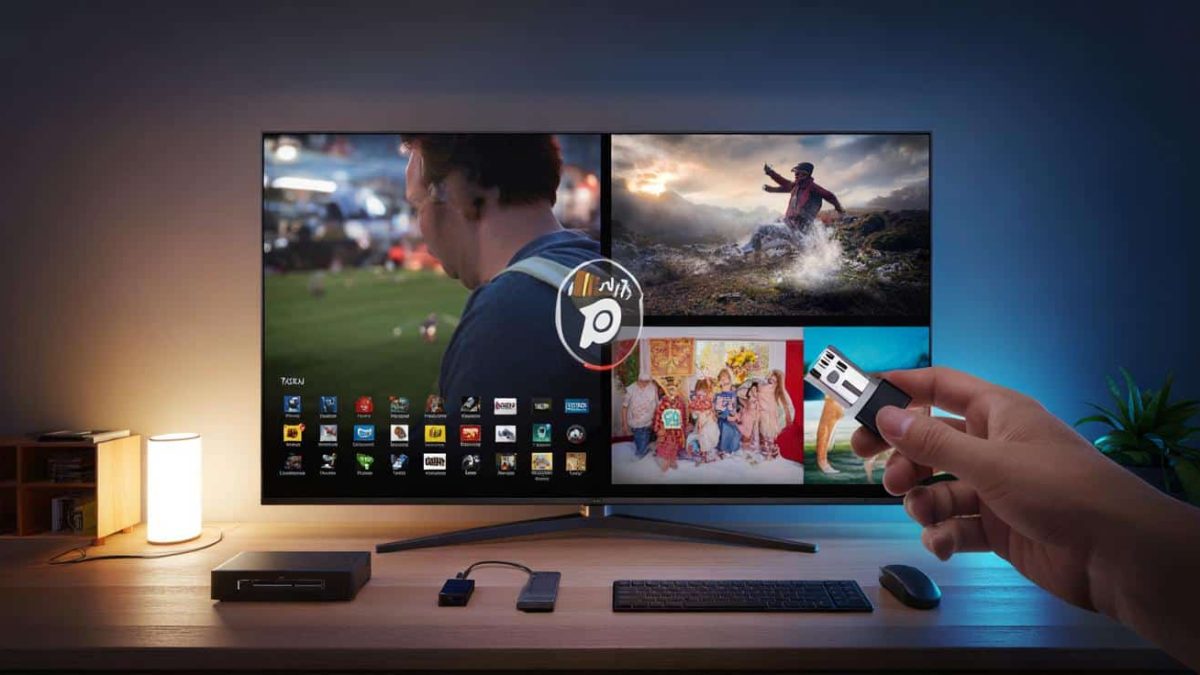
The power of your TV’s USB port: Most people look at the back of their television and see a confusing mess of wires and plugs. Among those connections sits a small, rectangular slot that often goes completely ignored or is used solely for the occasional software update.
However, that tiny port is actually one of the most versatile tools in your home entertainment setup. It is capable of much more than just sitting idle; it acts as a gateway to turning your standard screen into a high-tech powerhouse.

By understanding how to use this feature, you can eliminate clutter, improve your viewing experience, and even add new features to an older television. Let’s explore five incredible ways you can start using that port today to unlock its full potential.
A Hidden Hub for Power and Convenience
The majority of modern television sets come equipped with at least one or two USB ports. While manufacturers originally designed these for service technicians, they have evolved into a vital source of 5V power for various peripherals.
For many users, the primary benefit is the ability to hide messy cables. Instead of running long wires to a wall outlet, the port provides a direct energy source for small devices sitting right behind the screen. This creates a much cleaner look for mounted displays.

Understanding the power output is the first step. Most standard ports provide enough energy to run basic accessories, though some high-performance devices might require a specific “High Power” port if your TV has one labeled as such.
1. Creating an Immersive Home Theater Atmosphere
One of the most popular ways to use the port is by installing LED bias lighting. These are strips of lights that stick to the back of your television and plug directly into the USB slot for power.
When you turn on your TV, the lights automatically power up, casting a soft glow against the wall behind the screen. This does more than just look cool; it actually helps reduce eye strain during long movie marathons in dark rooms.

By increasing the ambient light around the screen, your eyes don’t have to work as hard to adjust to bright flashes. It also improves perceived contrast, making the blacks on your screen look much deeper and richer than they actually are.
“Research into visual ergonomics suggests that ambient backlighting can significantly decrease ocular fatigue. By providing a consistent reference point for the eye, the brain processes screen brightness changes more comfortably, leading to a more relaxed viewing session.”
2. Turning Your TV Into a Massive Digital Frame
If you have thousands of photos sitting on your phone or computer, your TV’s USB port offers a way to bring those memories to life. You can simply load your images onto a USB flash drive and plug it directly into the port.
Most modern smart TVs have a built-in media player that can recognize these files instantly. You can set up a slideshow to play during parties or family gatherings, effectively turning a giant black rectangle on your wall into a dynamic piece of art.
This feature is also excellent for professional settings. If you own a small business or are giving a presentation, you can display menus, advertisements, or informational slides without needing a bulky laptop connected to the screen.
3. Powering Your Favorite Streaming Sticks
Devices like streaming sticks and small media players have revolutionized how we watch content. However, they all require power to function. Instead of taking up another socket on your power strip, you can use the TV’s own port.
By plugging the power cable of your streaming device into the TV’s USB port, the device will turn on and off along with your television. This is an efficient way to manage energy and keep your entertainment center organized.
It is important to check the requirements of your streaming device. While most work perfectly, some 4K versions require more power than a standard port can provide. If you see an “insufficient power” warning, you may need a specialized power-boosting cable.
Technical Specifications of Common TV USB Ports
Knowing what your port can handle is essential for safety and performance. Here is a breakdown of the typical power outputs you might encounter on various television models.
| Port Type | Standard Voltage | Common Amperage | Best Use Case |
|---|---|---|---|
| USB 2.0 | 5V | 0.5A (500mA) | Keyboards, Mice, Flash Drives |
| USB 3.0 (Blue) | 5V | 0.9A (900mA) | External Hard Drives, Webcams |
| HDD / High Power | 5V | 1.0A – 2.0A | Large Hard Drives, Fast Charging |
4. Transforming Navigation with External Peripherals
Typing in movie titles or searching for YouTube videos using a standard remote control is a slow and frustrating experience. Your USB port offers a simple solution by supporting external hardware.
You can plug in a wireless keyboard or mouse dongle, and most TVs will recognize it immediately. This makes browsing the internet or logging into streaming apps significantly faster and more intuitive for the average user.
For those who enjoy gaming, many televisions also support wired or wireless controllers through this port. This allows you to play built-in Android games or cloud gaming services with the precision of a console experience without extra hardware.
“The integration of HID (Human Interface Device) standards in modern televisions has bridged the gap between computers and home entertainment. This allows for seamless plug-and-play functionality that requires zero technical knowledge from the end user.”
5. Local Storage and High-Quality Media Playback
Streaming services are great, but they are limited by your internet speed and often compress the video quality. By using the USB port for local playback, you can watch high-bitrate 4K movies directly from a hard drive.
This is the preferred method for movie enthusiasts who want the absolute best visual and audio quality. Files played directly from a drive do not suffer from buffering, lag, or the “pixelation” often seen during peak internet usage hours.
Additionally, some televisions allow you to use a USB drive as an “Extended Storage” device. This is particularly useful for smart TVs that have very little internal memory, allowing you to download more apps and games without running out of space.
Security and Maintenance for Your USB Port
While the port is incredibly useful, it is important to treat it with care. You should always ensure that the devices you plug in are free from dust and debris, as a poor connection can cause the TV to restart or malfunction.
When using an external hard drive, it is often better to use a “powered” drive (one that plugs into a wall) if the TV port isn’t labeled for high output. This prevents overtaxing the television’s internal power supply and ensures your data remains safe.
Keep in mind that the file format of your USB drive matters. Most TVs prefer FAT32 or exFAT formats. If your television doesn’t recognize your drive, you may need to plug it into a computer and change the format settings before it will work on the big screen.
FAQs – The power of your TV’s USB port
Can I charge my smartphone using the TV USB port?
Yes, you can charge a phone, but it is usually much slower than a wall charger. Most TV ports only offer low amperage, so it is best used for a slow overnight charge or to keep a phone from dying while you watch a movie.
Will using the USB port for light strips damage my TV?
No, as long as the light strip is designed for 5V USB power. These strips draw very little energy and are safely managed by the television’s power board without causing any long-term damage or overheating.
Why doesn’t my TV recognize my external hard drive?
The drive might be formatted in a way the TV doesn’t understand, or it might be asking for more power than the port can give. Try using a smaller flash drive or check if your drive needs to be formatted to FAT32 or exFAT.
Can I use the USB port to record live TV shows?
Some televisions have a “PVR” or “Record” feature that lets you save live broadcasts to a USB drive. Check your TV remote for a record button or look in the settings menu to see if your specific model supports this.
Is it safe to leave a USB drive plugged in all the time?
Generally, yes. However, USB drives can get warm during use. If you aren’t using the files for a long time, it is a good habit to remove the drive to extend its lifespan and reduce the very small amount of power it consumes.