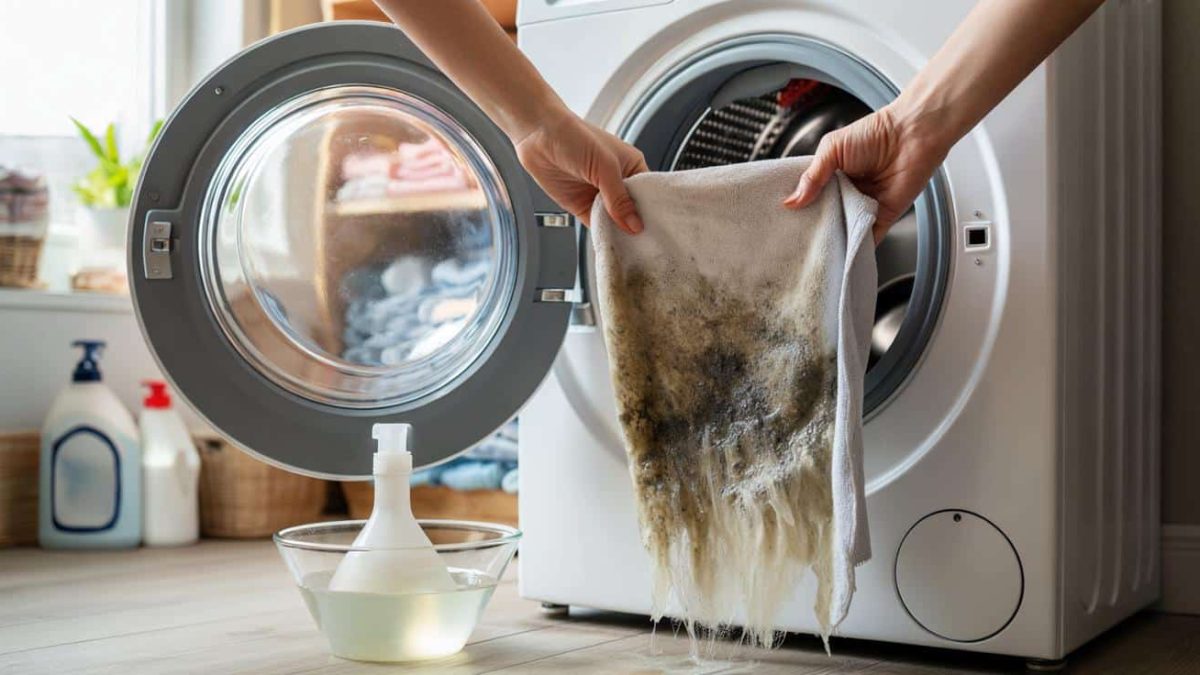
The Shocking Dirt Trap in Your Washing Machine You Never Knew About: Most homeowners believe that because a washing machine uses soap and hot water, the appliance itself stays clean naturally. However, a hidden compartment is likely harboring layers of sludge, hair, and bacteria right under your nose.
This mysterious area is the primary cause of that musty smell on your “clean” clothes and can eventually lead to expensive mechanical failures. If you have noticed black flakes or a sour odor coming from your drum, you are likely dealing with a neglected washing machine filter.

Understanding how this dirt trap works is the first step to ensuring your laundry is actually hygienic. Ignoring this small component can turn your high-end appliance into a breeding ground for mold and mildew that spreads to every load of laundry you wash.
The Hidden Filter: Where the Sludge Accumulates
Every modern washing machine is designed with a drain pump filter, often referred to as a “coin trap” or “lint catcher.” This small component is responsible for catching stray items like buttons, coins, and hair before they reach the main pump.
Over time, this filter becomes a magnet for laundry detergent residue, fabric softener, and body oils. When these substances combine with trapped water, they form a thick, greyish slime known as scrud.

This sludge does not just sit there quietly; it begins to decompose and release foul gases. Because the filter is located at the very bottom of the machine, it remains submerged in stagnant water between every wash cycle, making it a perfect environment for bacterial colonies to flourish.
Why Your Clothes Smell Even After a Long Wash
Many people try to solve the problem of smelly laundry by adding more fabric softener or using extra detergent. In reality, this only makes the problem worse because the chemicals provide more “food” for the gunk in the filter.
When the filter is clogged, the machine cannot drain efficiently. This means that dirty, soapy water from the previous cycle often gets pulled back into the rinse cycle of your current load.

You are essentially washing your clothes in a “stew” of old skin cells and stagnant water. This is why clothes might smell fresh while damp but take on a sour, chemical odor once they dry completely.
“The build-up of organic matter in appliance filters acts as a silent reservoir for microorganisms. Without regular manual removal, these pathogens can transfer onto textiles, leading to skin irritation and persistent odors that survive standard wash temperatures.”
Common Signs Your Filter is Overdue for a Clean
Identifying a dirty filter is simple if you know what to look for. One of the most obvious signs is a machine that takes much longer than usual to finish a cycle, particularly during the spin and drain phases.
If you find that your clothes are still dripping wet at the end of a cycle, the drain pump is likely struggling to push water through a wall of hair and lint. You may also see small black or brown flecks on light-colored fabrics that resemble wet soot.
Another red flag is a vibrating machine. When the filter is obstructed, the water balance inside the drum becomes uneven, causing the appliance to shake violently or make a loud grinding noise as the pump works overtime.
Data Analysis: Impact of Clogged Filters on Appliance Life
Maintaining the cleanliness of the hidden filter isn’t just about hygiene; it is a financial necessity for most households.
| Issue Identified | Potential Impact | Estimated Repair Cost |
|---|---|---|
| Clogged Drain Pump | Complete machine failure | $150 – $300 |
| Mold Accumulation | Health risks and odor | Cost of deep clean kits |
| Excessive Vibration | Damaged drum bearings | $250 – $400 |
| Increased Cycle Time | Higher electricity bills | 15% energy increase |
The Step-by-Step Guide to Cleaning the Dirt Trap
Locating the trap is usually the hardest part for most users. On front-loading machines, there is typically a small rectangular or circular door at the bottom right or left of the front panel.
Before opening it, you must place a shallow tray or a thick towel on the floor. When you unscrew the filter, about a pint of stagnant water will pour out immediately, which can be quite a shock to the unprepared homeowner.
Once the water has drained, you can fully unscrew the cap and pull out the cylindrical lint filter. More often than not, it will be covered in a slippery, dark film.
Expert Tips for Long-Lasting Appliance Health
To keep the system running smoothly, experts suggest cleaning the filter at least once every three months. If you have pets that shed heavily, you may need to check it once a month to prevent hair clogs.
Using white vinegar as a natural rinse agent can also help break down the soap scum before it reaches the trap. Many technicians also advise against using excessive amounts of liquid pods, as the plastic casings often fail to dissolve and end up stuck in the filter.
Reducing the amount of liquid fabric softener can significantly decrease the rate of slime production. These products are oil-based and act as a glue for lint, creating a “thickening” effect inside the drainage pipes.
“Modern high-efficiency machines use significantly less water than older models. This lack of water volume means that undissolved detergents are more likely to settle in low-flow areas like filters, requiring more frequent manual intervention than machines from 20 years ago.”
The Health Risks of a Neglected Washing Machine
A dirty washing machine is more than just a nuisance; it can be a health hazard for those with sensitive skin or respiratory issues. The damp environment of a clogged filter is a breeding ground for Aspergillus and other mold species.
When the machine runs, these spores can become airborne or settle into the fibers of towels and bedsheets. For young children or people with allergies, this can lead to unexplained rashes or persistent sneezing.
Furthermore, biofilms—which are slimy layers of bacteria—can protect harmful pathogens from being killed by standard laundry soap. Regular cleaning of the dirt trap ensures that these colonies are physically removed from the home environment.
Why High Temperatures Won’t Always Help
There is a common misconception that running a 90-degree “boil wash” will magically clear out the filter. While heat helps kill bacteria, it cannot remove physical obstructions like hair, coins, or thickened sludge.
The heat may actually cook the debris together, making it harder to remove later. Physical removal is the only guaranteed way to restore the drainage efficiency of the appliance.
Homeowners should consider the filter cleaning as vital as cleaning the lint screen in a dryer. It is a simple five-minute task that can add years to the life of the electric motor and the pump assembly.
The “Self-Cleaning” Myth of Modern Appliances
Many new machines come with a “Tub Clean” or “Self-Clean” cycle. While these cycles are excellent for disinfecting the drum and the rubber door seal, they rarely reach the depths of the pump filter.
The centrifugal force used in these cycles actually pushes heavier debris toward the filter, meaning a self-clean cycle might actually be the reason your filter finally gets completely blocked.
Always follow a self-cleaning cycle with a manual check of the trap. You will be surprised at how much loosened debris the machine “caught” and moved into the filter during the cleaning process.
Protecting Your Investment and Your Laundry
At the end of the day, a washing machine is a significant investment. Taking care of the hidden dirt trap ensures that your clothes come out truly sterilized and smelling like they should.
Don’t wait for your machine to display an error code or for your laundry room to smell like a swamp. Take a moment this weekend to find that little door at the bottom of your machine and clear out the mess you never knew was there.
The peace of mind that comes with knowing your family’s clothes are being washed in a clean environment is well worth the five minutes of effort it takes to maintain this hidden component.
FAQs – The Shocking Dirt Trap in Your Washing Machine
Question
Where exactly is the washing machine filter located?
Most front-loading washing machines have a filter located behind a small access door at the bottom front of the unit. Top-loading machines may have a filter inside the center agitator or a lint trap along the rim of the drum.
Question
How often should I clean the hidden filter?
It is generally recommended to clean the filter every three to four months. However, if you have pets, wash very dirty work clothes, or do more than five loads a week, you should check it once a month.
Question
What happens if I never clean the washing machine filter?
Over time, the filter will become completely blocked, preventing the machine from draining. This can cause the motor to burn out, lead to water leaks, and cause your clothes to remain dirty and smelling of mold.
Question
Why is there water in the filter compartment when I open it?
This is completely normal. Washing machines are designed to keep a small amount of water in the pump housing to keep the seals moist. Always have a tray or towel ready to catch this water before opening the cap.
Question
Can I use chemicals to clean the filter instead of doing it manually?
Chemicals can help dissolve some soap scum, but they cannot remove solid objects like coins, hair, or lint. Manual cleaning is the only way to ensure the filter is completely clear of physical obstructions.
Question
Will a dirty filter make my energy bill higher?
Yes. If the filter is clogged, the pump has to work much harder and run for a longer duration to empty the drum. This extra strain consumes more electricity and increases the overall wear and tear on the appliance.