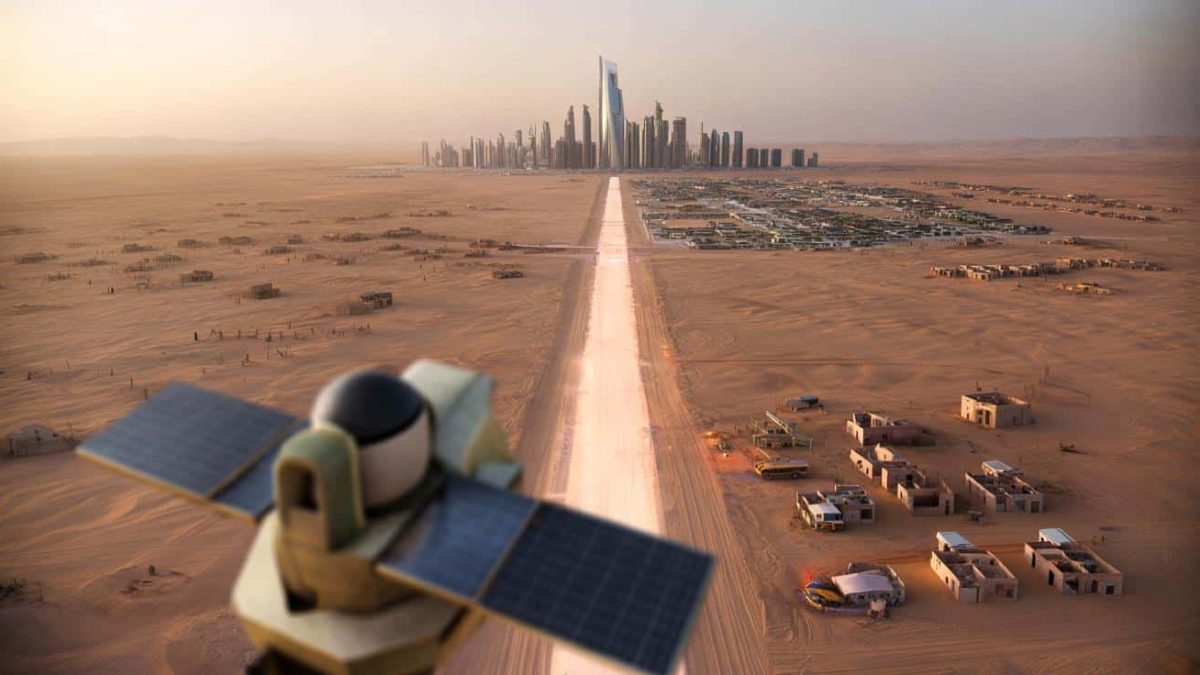
The $2 Trillion Desert Megacity That’s Dividing Saudi Arabia: Rising from the scorched sands of the Tabuk province, a massive construction project is currently redrawing the map of the Middle East. This ambitious venture, known as NEOM, represents one of the most expensive and controversial architectural gambles in human history.
With a price tag that experts now suggest could soar toward $2 trillion, this project is more than just a city. it is a total reimagining of how humans exist on Earth. However, as the glass walls of its flagship development, The Line, begin to rise, the world is questioning whether this is a futuristic utopia or an expensive desert mirage.

The project has sparked a fierce debate across the globe, pitting visions of a high-tech future against the harsh realities of environmental impact, human rights, and economic feasibility. As the kingdom pours its oil wealth into these foundations, the divide between supporters and skeptics continues to grow.
The Vision Behind the Megacity
At the heart of the project is the desire to move Saudi Arabia away from its historical dependence on oil revenue. The leadership wants to create a hub for global innovation that attracts the brightest minds in technology, green energy, and tourism.
This is not just one city but a collection of regions, each designed for a specific purpose. There is Oxagon, a floating industrial city meant to revolutionize global trade, and Trojena, a mountain destination that promises outdoor skiing in the middle of the desert.

The goal is to provide a home for millions of people while using 100% renewable energy. By removing cars and roads entirely, the planners hope to eliminate carbon emissions and create a footprint that preserves the natural landscape around it.
The Line: A Mirror in the Sand
The most talked-about part of this massive undertaking is The Line. It is designed as a single, continuous building that stretches for 170 kilometers across the desert. Standing 500 meters tall and only 200 meters wide, its exterior will be covered in mirrors to reflect the surrounding environment.
Inside this structure, residents will supposedly have access to everything they need—schools, clinics, and parks—within a five-minute walk. High-speed rail systems are intended to transport people from one end of the city to the other in just 20 minutes.
The sheer scale of this project challenges every rule of urban planning we have ever known. By building vertically instead of horizontally, it attempts to save space and energy, but the engineering required to maintain such a massive ecosystem in a harsh desert climate is unprecedented.

Economic Realities and Shifting Timelines
While the original plans were breathtakingly ambitious, the reality of building a $2 trillion megacity is starting to set in. Financial experts have noted that the sheer cost of the project is putting pressure on the kingdom’s sovereign wealth fund.
Recent updates suggest that the initial phases of the project might be scaled back or completed in smaller stages. Instead of several million people living in The Line by the end of the decade, the population targets have been adjusted to more modest figures for the first few years.
This shift in strategy has led to intense speculation about the long-term viability of the project. While construction remains active, the focus seems to have turned toward completing the sections necessary to host major upcoming international events.
The Environmental Paradox
Supporters of the project argue that it will be the most sustainable city on Earth. By relying on wind and solar power, it aims to lead the world in green technology. The design focuses on preserving 95% of the surrounding nature by keeping human activity contained within a small footprint.
However, critics point out the massive carbon cost of building such a structure. The production of the steel, glass, and concrete required for a 170-kilometer-long mirror city is immense. There are also concerns about how a giant mirrored wall might affect local wildlife and bird migration patterns.
Building a sustainable city requires more than just renewable energy. It requires a deep understanding of the local ecology. The challenge here is balancing the desire for a massive architectural statement with the delicate needs of the desert ecosystem.
A New Way of Living
Living in this desert megacity will feel like stepping into a science fiction movie. The city is designed to be “cognitive,” meaning it will use artificial intelligence to monitor everything from waste management to security and climate control.
The promise of a car-free life is a major selling point for those tired of urban traffic and pollution. The layout is intended to encourage social interaction and physical activity, with green spaces layered throughout the vertical structure.
Statistical Overview of the Project
| Project Feature | Specification / Target |
|---|---|
| Total Estimated Cost | Up to $2 Trillion |
| The Line Length | 170 Kilometers |
| The Line Height | 500 Meters |
| Energy Source | 100% Renewable |
| Target Population | 9 Million Residents |
| Key Regions | The Line, Oxagon, Trojena, Sindalah |
The Global Debate and Controversy
The project has not been without its share of criticism. Human rights organizations have raised concerns regarding the relocation of local tribes who have inhabited the region for generations. These communities are caught between their ancestral heritage and the kingdom’s march toward modernization.
Furthermore, the level of surveillance required to run a “cognitive city” has sparked privacy debates. With sensors and AI integrated into every street corner, the line between efficiency and constant monitoring becomes blurred.
Despite these hurdles, the work continues. Thousands of workers and hundreds of global companies are already on the ground, turning the red sands into a massive construction zone. The world is watching to see if this vision will truly change the world or serve as a cautionary tale.
Tourism and the Future Economy
Beyond being a home for residents, the project is a major play for the global tourism market. Sindalah, a luxury island resort, is expected to be one of the first areas to open to the public. It aims to compete with the world’s most exclusive Mediterranean destinations.
By creating a year-round destination for luxury travel, skiing, and tech conferences, the kingdom hopes to create millions of new jobs. This economic shift is vital for a country where a large percentage of the population is under the age of 30 and looking for modern career paths.
The success of this venture depends on its ability to attract not just tourists, but long-term residents who are willing to embrace a completely new way of life. It is a social experiment as much as it is a construction project.
The Engineering Challenges Ahead
Building a skyscraper that is 170 kilometers long presents obstacles that have never been solved before. Engineers must account for the curvature of the Earth, which becomes a significant factor over such a long distance. There are also questions about how air will circulate within the massive mirrors to keep the interior cool.
The water supply is another major hurdle. In a region with almost no fresh water, the city will rely on advanced desalination plants. These plants are intended to be powered by green energy, but the scale of water production needed for millions of people is staggering.
Divided Opinions: Success or Failure?
For many, NEOM is a symbol of hope and a preview of a cleaner, more organized future. They see it as a necessary step for a world facing climate change and overpopulation. To them, the high cost is a small price to pay for a technological leap forward.
Others see it as a vanity project that ignores the practical needs of the present day. They argue that the resources spent on this desert city could be better used to improve existing urban centers or to develop green energy in more inhabited areas.
Regardless of which side of the divide one falls on, there is no denying that the project is a feat of human ambition. It represents a bold bet on the future, a massive investment that will either redefine humanity’s relationship with the desert or remain a monument to a dream that was too big to realize.
FAQs – The $2 Trillion Desert Megacity
What is the main purpose of the desert megacity project?
The project is designed to diversify the economy of Saudi Arabia, reducing its reliance on oil and creating a new global hub for technology, innovation, and sustainable living.
How long is The Line expected to be?
The Line is planned to be 170 kilometers long, stretching from the mountains of Tabuk to the Red Sea, though construction is being completed in phases.
Will people actually be able to ski in the desert?
Yes, the region called Trojena is located in a mountainous area where temperatures are cooler, and it is being developed as a year-round destination for outdoor skiing and adventure sports.
Is the project actually being built right now?
Yes, massive construction is currently underway. Satellite images and ground footage show extensive groundwork, excavation, and the early stages of building structures across the various regions.
How will the city be powered?
The goal is for the entire development to run on 100% renewable energy, utilizing the region’s vast solar and wind resources to provide power for residents and industry.
What are the biggest challenges facing the project?
The project faces significant engineering hurdles, high financial costs, environmental concerns regarding its construction footprint, and international scrutiny over human rights and privacy.