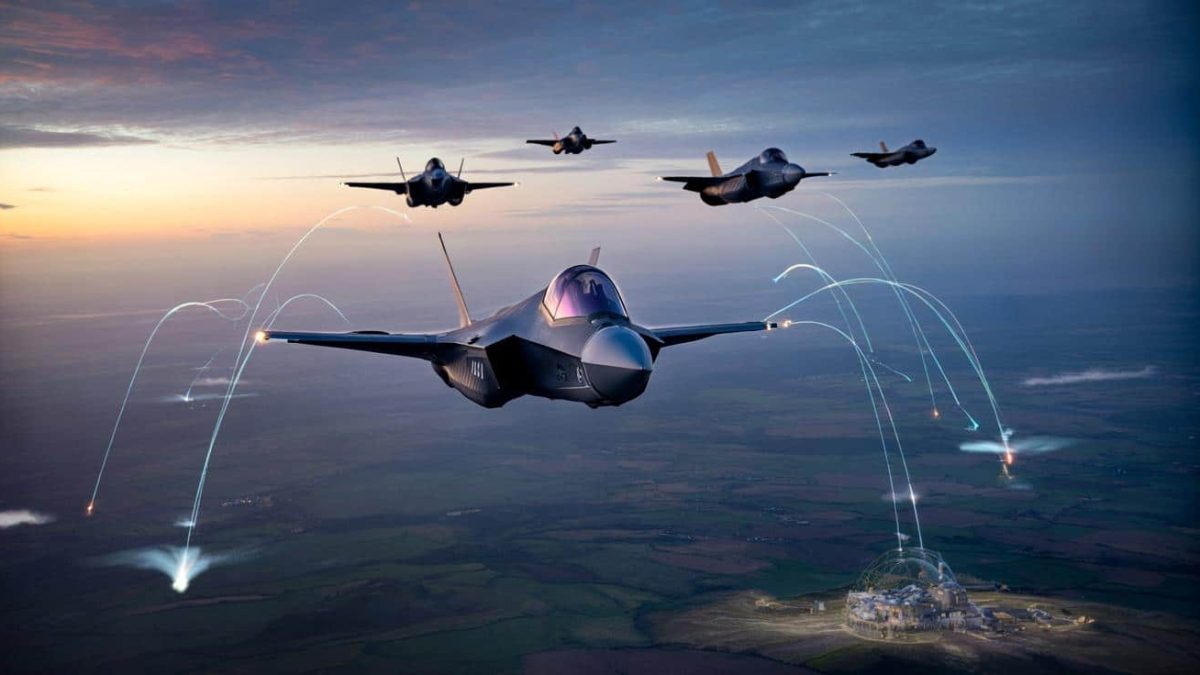
Europe’s High-Stakes Gamble: Embracing the F-35 Jet and the Risks of Losing Sovereignty: Look across the modern skies of the European continent, and you will see a transformation taking place. From the rainy coastlines of Norway to the sunny bases of Italy, a single, sleek aircraft is becoming the face of Western defense.
The F-35 Lightning II, an American-made fifth-generation stealth fighter, is winning contract after contract. However, as nations line up to buy this high-tech machine, a quiet but intense debate is growing over what these deals really cost in the long run.
While the jet offers unmatched power, many experts worry that Europe is trading its independence for American technology. This strategic shift could change the balance of power and the future of European industry for decades to come.
The Invisible Giant in European Skies
The F-35 is not just a plane; it is a flying computer that can hide from radar and share vast amounts of data. For many European leaders, buying this jet is a simple choice to stay ahead of modern threats. They want the best equipment available right now to protect their borders.
The adoption of the F-35 creates a unified front across the continent. When multiple countries fly the same jet, they can share parts, training, and tactics. This makes it much easier for different air forces to work together during a crisis.

However, this unity comes with a heavy reliance on the United States. Since the jet is built and managed by Lockheed Martin, the countries that buy it must look to Washington for updates, repairs, and technical secrets.
A Growing List of Customers
The momentum behind the F-35 in Europe is undeniable. Countries like Germany, Switzerland, and Poland have recently joined the list of buyers. Even nations that previously built their own fighters are now looking toward the American stealth jet to fill gaps in their defense.
The shift toward the F-35 represents a major turning point for European defense. It shows a preference for immediate capability over the long-term goal of building local technology. This choice strengthens current defenses but leaves local industries in a very difficult position.

The scale of this shift is reflected in the numbers. Thousands of these jets are expected to be stationed in Europe over the next twenty years. Each sale reinforces the dominance of American aerospace standards over domestic European alternatives.
Understanding the F-35 Presence in Europe
To see how deep this integration goes, it helps to look at how many countries are moving toward this single platform. The variety of nations involved shows that this is more than just a trend; it is a complete restructuring of air power.
| Country | Status | Primary Goal |
|---|---|---|
| United Kingdom | Active Operator | Carrier-based operations and stealth capability. |
| Germany | Future Operator | Replacing older jets and meeting nuclear sharing duties. |
| Italy | Active Operator | Local assembly and regional maintenance hub. |
| Poland | Ordered | Modernizing forces to counter eastern threats. |
The Tech Squeeze: Can Europe Still Innovate?
One of the biggest risks of buying the F-35 is what happens to the factories and engineers in Europe. When a country spends billions of dollars on an American jet, there is less money left to develop a European fighter.
If Europe stops building its own high-end combat planes, it could lose its status as a global leader in aerospace. Thousands of highly skilled jobs could disappear as the focus shifts from inventing new tech to simply maintaining American equipment.
This creates a cycle of dependency. Once a nation stops innovating in stealth and sensors, it becomes much harder to start again in the future. The “brain drain” from European defense firms to overseas competitors is a real and present danger.
The Question of Sovereignty and Control
The most controversial part of the F-35 program is the software. The jet runs on millions of lines of code that are strictly controlled by the United States. This means that European nations do not have full access to the “brains” of their own aircraft.
If a country wants to add a new type of missile or change a specific setting, they usually have to ask for permission. This leads to concerns that Europe might not be able to use its jets exactly how it wants if its interests ever clash with American foreign policy.
Some argue that this isn’t just a purchase; it’s a long-term contract that binds a nation’s military strategy to the Pentagon. The ability to act independently is the core of sovereignty, and many feel that is being slowly eroded.
Strategic autonomy is more than just a buzzword. It is the ability to choose your own path without needing external approval. When the core of your military strength is controlled by a foreign power, your options in a global crisis are naturally limited.
The Logistics Trap
Modern jets like the F-35 require a constant connection to a global logistics network. This system tracks every part and every flight hour to ensure the planes are ready for combat. While efficient, this system is managed centrally from the United States.
If the connection is cut or if access is restricted, a nation’s entire air force could be grounded in a matter of weeks. This creates a “kill switch” scenario that makes some European military planners very nervous.
Even the maintenance is highly specialized. Unlike older jets where a local mechanic could fix many issues, the F-35 often requires specialized tools and approval codes that only Lockheed Martin can provide. This limits how much a country can do for itself during an emergency.
Competing Visions for the Future
Not everyone is happy with the F-35 takeover. Countries like France are pushing hard for European-made alternatives. Programs like the Future Combat Air System (FCAS) are designed to keep European engineering alive and maintain independence.
However, these domestic programs are expensive and take a long time to build. By the time a European stealth jet is ready, the F-35 will already be the standard across most of the continent. This creates a “first-mover advantage” that is hard to beat.
The tension between buying “off-the-shelf” from America or waiting for a “homegrown” European solution is the central conflict in modern defense. It is a choice between safety today and independence tomorrow.
Economic Consequences and the Industrial Base
When a country buys the F-35, it is also an economic decision. Billions of euros flow out of Europe and into the American economy. While there are some local “workshare” agreements, the vast majority of the high-value work stays in the United States.
European aerospace companies like Airbus or Dassault find themselves competing with a product that has the full backing of the U.S. Government. This makes it difficult for domestic firms to win contracts even within their own borders.
If Europe’s industrial base weakens, it loses more than just money. It loses the ability to respond to new threats in its own way. Defense experts warn that a continent that cannot build its own weapons is a continent that cannot truly lead.
Protecting the industrial base is not about being stubborn. It is about maintaining a culture of excellence and innovation. Once those skills are lost, they take generations to rebuild, leaving a nation vulnerable to the whims of its suppliers.
Finding a Middle Ground
Is there a way for Europe to have the F-35 and its sovereignty too? Some countries are trying to negotiate better terms. They want more access to the software and more responsibility for the maintenance of the jets.
Others are trying a “mixed fleet” approach. They buy a small number of F-35s for specific stealth missions while keeping their own domestically made jets for the bulk of their daily operations. This keeps their local factories running while still getting the benefits of American technology.
This middle ground is difficult to maintain. As budgets get tighter, governments often feel pressured to choose just one platform to save money. More often than not, the F-35 is the one that wins that fight.
The Long-Term Outlook
The decision to embrace the F-35 will be felt for the next fifty years. It will define how European pilots train, how their generals think about war, and how their politicians interact with Washington.
While the jet provides incredible defense today, the risk of losing “sovereign control” remains a shadow over the program. Europe is currently walking a tightrope between being a strong partner to the United States and being a subordinate client.
Only time will tell if this gamble pays off. If Europe can use the F-35 as a tool while still building its own future, it may emerge stronger. But if it lets its own industries wither away, it may find that its security comes at a price far higher than the sticker price of the jet.
FAQs – Europe’s High-Stakes Gamble: Embracing the F-35 Jet
Why are so many European countries buying the F-35?
Modern threats require stealth and advanced data sharing. The F-35 is currently the only fifth-generation fighter available for purchase that is proven and ready for immediate use.
What does “loss of sovereignty” mean in this context?
It refers to the risk that European nations may become too dependent on American software, parts, and political approval to use their own military equipment effectively during a crisis.
Are there any European alternatives to the F-35?
Yes, projects like the Future Combat Air System (FCAS) and the Global Combat Air Programme (GCAP) are being developed, but they will not be ready for many years.
How does the F-35 affect the European economy?
Buying American jets sends billions of dollars to the U.S. instead of supporting local European manufacturers, which could lead to job losses in the European aerospace sector.
Can the U.S. “turn off” the F-35s sold to other countries?
While not a literal switch, the jet’s reliance on American-managed logistics and software updates means that the U.S. could theoretically limit a nation’s ability to fly the jets long-term.
Does Italy or the UK build any of these jets?
Yes, Italy has a final assembly line, and the UK produces many components, but the core technology and overall control of the program still reside in the United States.