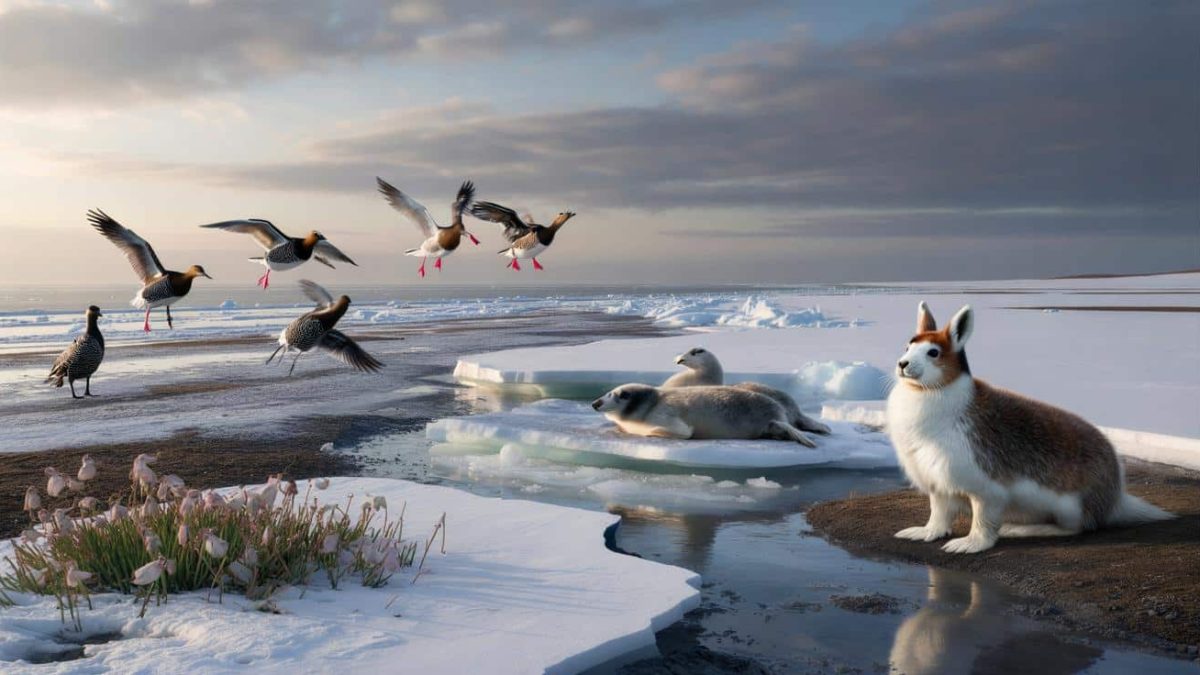
Shocking Arctic Shifts Disorient Wildlife: The top of our world is transforming into a landscape that many animals no longer recognize. As temperatures rise faster in the north than anywhere else on earth, the biological clocks of iconic species are being pushed to their limits.
This environmental crisis is moving beyond melting ice and rising seas. It is fundamentally changing how animals eat, migrate, and survive. New patterns are emerging that threaten to break the delicate balance of the northern food chain forever.

From disoriented predators to confused migratory birds, the cost of these shifts is becoming impossible to ignore. Understanding these changes is the first step toward grasping the true scale of the ecological emergency unfolding in the frozen north.
The Great Thaw: Why the Arctic is Changing So Fast
The North Pole is warming nearly four times faster than the rest of the planet. This phenomenon creates a domino effect that impacts every living creature in the region. When the ice disappears, the very foundation of the Arctic ecosystem begins to crumble.
Ice acts as a platform for hunting, a nursery for young animals, and a resting place for exhausted travelers. Without it, the “highways” that animals have used for thousands of years are vanishing. This forces wildlife to find new, often dangerous, ways to adapt to a liquid world.
The Sensory Disruption of Iconic Predators

Polar bears are perhaps the most visible victims of this shift. They rely on sea ice to hunt seals, their primary source of energy. As the ice melts earlier in the spring and freezes later in the autumn, these massive predators are forced onto land for longer periods.
Once on land, they face a world they are not evolved to navigate. They often wander into human settlements looking for food, leading to dangerous encounters. This disorientation isn’t just about hunger; it’s about the loss of the only habitat they have ever known.
“The loss of sea ice is not just a loss of territory; it is the destruction of a hunting strategy. Predators that rely on specific seasonal timings are finding that their internal calendars no longer match the reality of the environment around them.”
A Silent Crisis Under the Waves

Narwhals and bowhead whales are also feeling the pressure of a changing ocean. These “unicorns of the sea” rely on the cover of ice to protect themselves from predators like killer whales. As the ice recedes, the soundscape of the ocean changes as well.
Increased ship traffic and industrial noise are now traveling through open water that was once muffled by ice. This acoustic pollution confuses marine mammals that rely on sound to communicate and find food. It creates a “fog” of noise that leaves them vulnerable and stressed.
The Dangerous Mismatch of Migration
Birds that fly thousands of miles to breed in the Arctic are arriving to find their food sources are already gone. This is known as a phenological mismatch. Insects are hatching earlier due to the warmth, but the birds are still arriving on their old schedules.
By the time the chicks hatch, the peak of the insect population has passed. This means many young birds starve before they are old enough to fly. This timing error is causing bird populations to drop at an alarming rate across the entire northern hemisphere.
Arctic Transformation Data at a Glance
The following data highlights the drastic changes occurring in the northern regions over the last few decades. These numbers represent the physical shifts that are driving wildlife disorientation.
| Indicator | Observed Change | Impact on Wildlife |
|---|---|---|
| Sea Ice Minimum | Declined by 13% per decade | Loss of hunting grounds for bears/seals |
| Arctic Temperature | Increased 3°C to 4°C | Earlier insect blooms and plant growth |
| Snow Cover | Decreased significantly in June | Loss of camouflage for foxes and hares |
| Ocean Noise | Increased 10x in some areas | Communication failure in whales |
The Camouflage Paradox
Many Arctic animals change their fur color to match the seasons. The Arctic fox and the snowshoe hare turn white in the winter to hide from predators. However, with snow melting earlier, these animals are staying white against a brown and green landscape.
This makes them easy targets for eagles and wolves. They are effectively wearing a “neon sign” that points directly to them. Evolution cannot keep up with the speed of the melting snow, leaving these creatures trapped in a color pattern that no longer works.
“We are witnessing a mismatch between genetics and geography. Animals that have evolved over millennia to blend into the snow are now standing out like beacons because the seasons are shifting faster than their biology can respond.”
New Competitors and Invasive Species
As the north warms, more southern species are moving in. Red foxes are moving north and competing with smaller Arctic foxes for dens and food. Grolar bears—a hybrid of grizzly bears and polar bears—are becoming more common as their territories overlap.
These new interactions are not always peaceful. The intruders from the south are often larger and more aggressive. The native Arctic wildlife, already stressed by the heat, often loses out in the fight for limited resources.
The Threat of Hidden Pathogens
Permafrost is the frozen ground that covers much of the Arctic. As it thaws, it releases ancient bacteria and viruses that have been trapped for thousands of years. Wildlife in the region has no natural immunity to these “zombie” pathogens.
There have already been instances where thawing ground led to the sudden loss of large herds of reindeer. This hidden threat adds another layer of danger to an already fragile environment. It is a biological risk that scientists are only beginning to understand.
Impact on Food Security and Scavenging
Walruses are also experiencing major lifestyle changes. Typically, they rest on ice floes between dives for clams. Now, they are huddling on beaches in massive groups of thousands. These “haul-outs” are dangerous for the calves.
In these crowded conditions, any small scare can cause a stampede. Younger animals are often crushed in the chaos. This change in behavior is a direct result of the disappearing offshore ice that they once used as a safe haven.
“The congregating of species that used to be spread out over miles of ice creates a pressure cooker environment. Disease spreads faster, and the risk of fatal accidents increases when thousands of tons of animals are forced into tiny spaces.”
The Emotional Toll of a Changing World
While it is hard to measure the “feelings” of animals, observers note changes in social behaviors. Mother bears are often seen looking for their cubs more frantically, and migratory patterns appear more erratic. The mental map these animals use is being erased.
The “untold cost” is the loss of the rhythmic cycle of life that has existed for ages. The Arctic is becoming a place of chaos rather than a place of cold stability. This disorientation is a warning sign for the rest of the planet.
Final Thoughts on the Arctic Crisis
The shifts in the Arctic are a clear signal that the world is changing in ways we cannot easily fix. Wildlife is trying to adapt, but the speed of the change is overwhelming. The loss of these species would be a permanent scar on the earth’s biodiversity.
Protecting these regions requires a global effort to slow the warming trend. Without intervention, the “shocking shifts” we see today will become the new, tragic reality. The survival of the North depends on our ability to act before the ice is gone forever.
FAQs – Shocking Arctic Shifts Disorient Wildlife
Why are Arctic animals getting confused?
Animals rely on seasonal cues like temperature and daylight to know when to migrate, hunt, or breed. Because the Arctic is warming so fast, these cues no longer match the actual environment, leading to confusion.
Do polar bears have any way to survive without ice?
While some polar bears try to hunt on land or scavenge for bird eggs, these food sources do not provide enough calories to sustain their large body sizes for long periods.
How does the melting ice affect animals that live in the water?
Marine mammals like whales lose their protection from predators and face louder oceans due to increased shipping. The lack of ice also changes the types of fish and plankton available for them to eat.
What is a “phenological mismatch”?
It is when two events that usually happen at the same time—like a bird arriving for summer and its food source hatching—no longer align. High temperatures cause plants and insects to emerge before the birds arrive.
Is there any hope for Arctic wildlife?
If global warming is limited and conservation efforts are increased to protect critical habitats, some species may find ways to adapt. However, many require the specific conditions of a frozen Arctic to survive long-term.
What are “zombie” pathogens in the Arctic?
These are ancient bacteria and viruses that have been frozen in the permafrost for centuries. As the ground thaws, they can become active again and infect local wildlife populations that have no immunity.
Why is the Arctic warming faster than the rest of the world?
This is due to a process called Arctic amplification. As white ice melts, it reveals dark ocean water which absorbs more heat, causing even more ice to melt in a continuous cycle.
How does less snow affect small land animals?
Small animals like lemmings rely on sub-zero snow layers for insulation and protection from predators. Without deep snow, they are exposed to both the extreme cold and the eyes of hungry hunters.