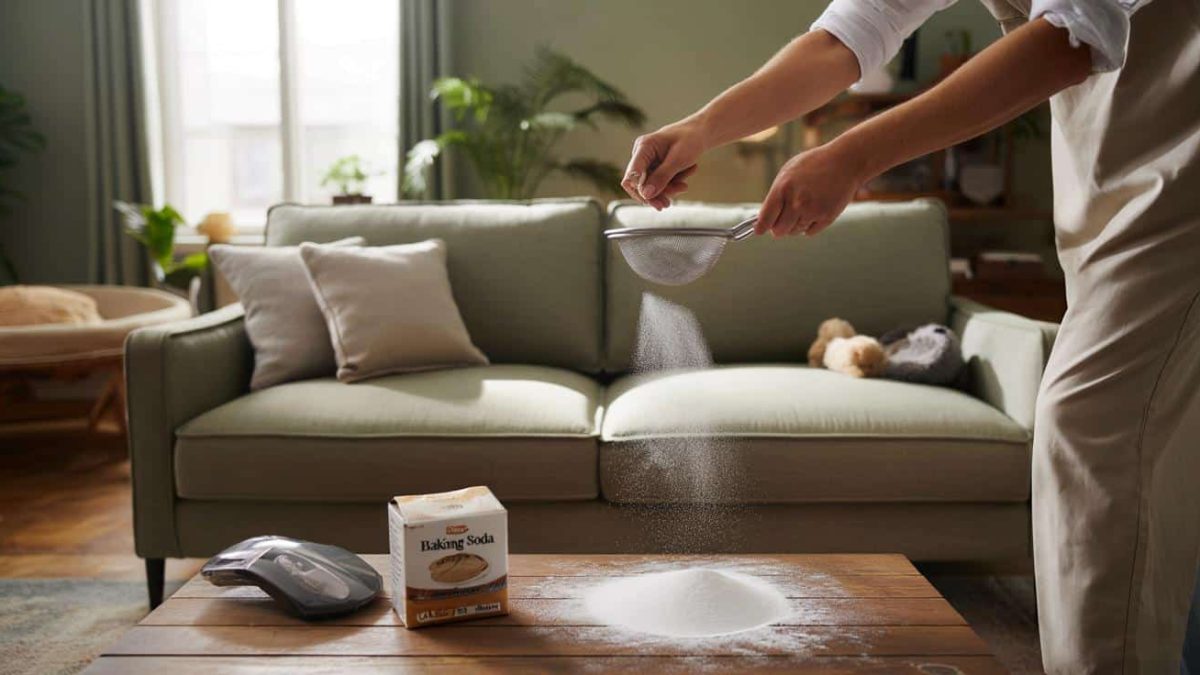
Stubborn sofa odors: they are the invisible intruders that can turn a cozy living room into an uncomfortable space. Whether it is the lingering scent of last night’s takeout, pet dander, or the musty smell of humidity, upholstery acts like a giant sponge for smells. While many people reach for expensive chemical sprays, those often just mask the problem temporarily rather than solving it.
Fortunately, there is a simple, low-cost method that top cleaning professionals use to refresh furniture overnight. This trick relies on basic science and a common household staple that actually pulls odors out of the fabric fibers instead of covering them up. By the time you wake up tomorrow morning, your sofa can smell as fresh as the day you bought it.

This secret method is gaining popularity because it is safe for homes with children and pets. It avoids the harsh synthetic fragrances found in commercial deodorizers, which can often trigger allergies or respiratory sensitivities. If you are tired of a smelly couch, this overnight transformation is the solution you have been waiting for.
Understanding Why Sofas Trap Smells So Easily
To solve the problem of a smelly sofa, you first have to understand why it happens. Upholstery fabrics like cotton, linen, and polyester are porous. This means they have microscopic gaps where dust, sweat, skin oils, and food particles can settle deep into the cushions.
Once these organic materials are trapped, bacteria begin to break them down. This biological process is what creates the funky smells that won’t go away with a simple vacuuming. Standard air fresheners only sit on the surface, leaving the source of the odor deep within the padding.
“Upholstery is essentially a massive filter for the air in your home. It traps smoke, kitchen grease, and pet dander. Without deep neutralization, these particles bond to the fibers, making the odor feel like a permanent part of the furniture.”

The Unexpected Trick: The Dry Baking Soda Method
The secret weapon for banishing stubborn sofa odors is the generous use of sodium bicarbonate, commonly known as baking soda. While many people use a small pinch of it here and there, the trick lies in the volume used and the duration of the treatment.
Unlike liquids that can cause mold if they soak into foam, baking soda is a dry alkaline substance. It works by neutralizing acidic odor molecules. Instead of reacting with water, it reacts with the molecules that create the smell, breaking their chemical bonds and rendering them odorless.
How to Apply the Overnight Treatment

The process is remarkably simple but requires a specific technique to be effective. First, you must ensure the sofa is completely dry. Then, you should sprinkle a heavy, even layer of baking soda over every inch of the fabric. Do not be afraid to use an entire box or two for a full-sized sectional.
Focus specifically on the armrests and the areas where people sit most often. Use a soft-bristled brush to gently massage the powder into the weave of the fabric. This ensures the powder reaches the deeper layers where the odors are hiding. Finally, let it sit undisturbed for at least twelve hours, ideally overnight.
“The effectiveness of sodium bicarbonate as a deodorizer comes from its amphoteric nature. It can react with both strongly acidic and strongly alkaline odor molecules, turning them into less volatile salt crystals that can be easily vacuumed away.”
Why Timing Is Everything for Odor Removal
Many people make the mistake of vacuuming the powder up after just twenty minutes. While this might remove some surface-level smells, it does not give the chemistry enough time to work. Odors trapped deep in the foam cushions need time to migrate toward the neutralizing powder.
By leaving the powder overnight, you allow the baking soda to absorb moisture and oils that hold the scent. In the morning, you will notice the powder might look slightly clumped or discolored. This is a good sign, as it means the substance has successfully pulled contaminants out of the fabric.
Comparing Odor Removal Methods
When looking at how to clean your furniture, it helps to see how the baking soda trick stacks up against other common household options. The following table provides a comparison of various methods used to treat upholstery smells.
| Method | Effectiveness | Cost | Drying Time |
|---|---|---|---|
| Baking Soda (Overnight) | High (Neutralizes Odors) | Very Low | None (Dry) |
| Aerosol Sprays | Low (Masks Odors) | Medium | 15 Minutes |
| Steam Cleaning | High (Sanitizes) | High | 6 – 12 Hours |
| Vinegar Spray | Medium (Antibacterial) | Low | 1 – 2 Hours |
Adding a Fragrance Boost Post-Treatment
If you prefer your sofa to have a specific scent, you can customize the baking soda before you apply it. Simply add five to ten drops of your favorite essential oil—such as lavender, lemon, or eucalyptus—to the box of powder and shake it well.
This creates a time-release scent effect. As the baking soda sits on the couch, the essential oils lightly permeate the fabric. When you vacuum the powder the next morning, your living room will be filled with a fresh, natural aroma that doesn’t feel heavy or artificial.
The Final Step: Proper Vacuuming
Vacuuming is the final piece of the puzzle. You must use a vacuum with high suction and a dedicated upholstery attachment. Move the nozzle slowly in overlapping strokes to ensure every grain of powder is removed.
Failure to remove all the powder can leave a gritty texture on the fabric. If you have a HEPA filter vacuum, this is the perfect time to use it. It will trap the tiny odor particles and the used baking soda, preventing them from being blown back into the air of your home.
“A thorough vacuuming after an overnight treatment is essential. It not only removes the neutralizing agent but also extracts the dust mites and allergens that the baking soda has helped loosen from the fabric fibers.”
Preventing Future Odors from Returning
Once your sofa is fresh, maintaining it is much easier than doing a deep clean. Try to vacuum your furniture at least once a week during your regular cleaning routine. This prevents the buildup of organic matter that leads to decay and bad smells.
Additionally, consider using washable slipcovers or throws if you have pets. These act as a sacrificial layer that can be tossed into the laundry easily. If a spill happens, blot it immediately with a dry cloth; never rub, as rubbing pushes the liquid deeper into the padding where it is harder to reach.
When to Call in the Professionals
While the baking soda trick is incredibly effective for most household smells, there are times when it might not be enough. If your sofa has been exposed to extreme smoke damage or deep-seated urine stains from pets, the odor may have reached the wooden frame or the interior springs.
In these rare cases, a professional upholstery cleaner with industrial-grade extraction equipment may be necessary. However, for 90% of daily living odors, the overnight powder method is the most efficient and cost-effective way to restore your living room’s comfort.
FAQs – The Unexpected Trick That Banishes Stubborn Sofa Odors Overnight!
Does baking soda work on all types of sofa fabric?
Yes, baking soda is safe for most fabrics, including cotton, polyester, and linen. However, you should always test a small, hidden area first if you have a delicate vintage fabric or silk. For suede or leather, it is better to avoid wet treatments and use only a light dusting of powder.
How much baking soda do I really need for a standard couch?
For a standard three-seater sofa, you will likely need one to two full boxes (16 ounces each). The key is to create a visible white layer over the surface. Using too little will not provide enough surface area to absorb the odors effectively.
Will the baking soda damage my vacuum cleaner?
In most cases, no. However, if you are using a vast amount, ensure your vacuum bag or canister is emptied frequently and that your filters are clean. Modern vacuums with HEPA filters are usually best suited for picking up fine powders like sodium bicarbonate.
Can I use this trick on my mattress or carpets too?
Absolutely. The overnight baking soda method works wonders on mattresses and carpets for the same reasons it works on sofas. It pulls out moisture and neutralizes the acidic compounds often found in sweat and body oils.
How often should I do this overnight treatment?
If you have pets or children, doing this once every three months is a great way to maintain a fresh home. If you live alone and are meticulous about cleaning, once or twice a year should be sufficient to keep your upholstery smelling like new.
Is it safe for pets to walk on the sofa during the treatment?
While baking soda is generally non-toxic, it is best to keep pets off the furniture while the powder is sitting. The fine dust can irritate their paws or cause them to sneeze. It is better to treat the sofa during a time when the room can be closed off.